
When new political maps make headlines in Indianapolis, confusion always follows. People start to wonder, “Are property boundaries changing too?” The short answer is no—but the misunderstanding is common. That’s where an ALTA Land Title Survey comes in. It’s the gold standard for confirming exactly where your land begins and ends, no matter what’s happening in politics.
Recently, discussions about redrawing state and local maps have been all over the news. Words like “boundaries” and “districts” sound uncomfortably close to property lines. For homeowners, developers, and lenders, that can create unnecessary worry. The truth is, political boundaries and property boundaries have nothing to do with each other—but many people mix them up.
When Political Maps Shift, Property Lines Stay the Same
Redistricting affects voting areas—not the land you own. It’s about which representative or council district you fall under, not where your fence, driveway, or deeded lot sits.
However, because redistricting involves maps, the public often assumes property boundaries are being redrawn too. Posts online showing new maps can make it look like the city is changing how neighborhoods are divided. That can spark panic among homeowners and real estate agents.
Here’s the good news: political lines may shift every few years, but your property’s legal boundaries never move unless there’s an official land action—like a subdivision, a recorded survey, or a deed change. In short, lawmakers can’t touch your lot lines.
That’s why the ALTA Land Title Survey exists—to document the real limits of ownership, based on deeds, monuments, and plats, not on political or zoning maps.
What an ALTA Land Title Survey Really Does

An ALTA Land Title Survey is a detailed map that shows exactly what you own and what affects it. “ALTA” stands for the American Land Title Association, and their standards set the highest level of accuracy for property surveys in the country.
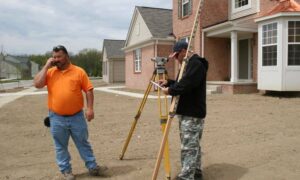
When a licensed land surveyor performs an ALTA survey, they combine boundary, title, and improvement data into one precise map. It shows:
- The property’s true perimeter lines
- All easements, setbacks, and rights of way
- Encroachments or overlaps from neighboring properties
- Locations of utilities and access roads
Lenders rely on ALTA surveys before approving loans. Developers use them to avoid building over easements or flood zones. Even property owners use them to confirm fences, driveways, or additions are where they should be.
In Indianapolis, where development moves quickly and zoning rules vary block to block, that accuracy makes a huge difference.
Why People Mix Up the Wrong Maps
Let’s be honest—maps look official. Whether it’s a district map, a zoning layer, or a screenshot from an online map, it feels like “proof.” But not all maps are created equal.
People often confuse:
- Political district maps (for voting) with parcel maps (for ownership)
- Zoning overlays (for land use) with survey lines (for legal boundaries)
- Neighborhood association maps with recorded plats at the county recorder’s office
- Online map screenshots with surveyed property data
- Fences or driveways with monumented corners marked by a professional surveyor
These mix-ups may seem small, but they can cause major issues—especially during a sale or refinance. A fence line that’s just one foot off can trigger title disputes or delay a mortgage closing.
So, when headlines about new boundaries pop up, remember this: only your ALTA Land Title Survey shows what’s legally yours.
What Can Actually Change Your Property Boundary
Your property line isn’t as fragile as you might think. It takes official steps to change it. A boundary only moves when:
- A new survey or plat is recorded
- A court order settles a dispute
- A lot split or consolidation is approved by the county
- A deed correction adjusts the legal description
That’s it. Political redistricting, zoning updates, or new city maps won’t ever alter the property you legally own.
To illustrate: imagine two homeowners in Indianapolis. After seeing the new district map online, one assumes their lot line changed and postpones selling their home. The other calls a surveyor for an updated ALTA Land Title Survey. The surveyor confirms their property hasn’t moved an inch. The second homeowner lists confidently—and closes without a hitch.
Why It Still Matters During Times of “Map Confusion”
Even though your property doesn’t change, these public map updates are perfect reminders to double-check your records.
If you’re buying land, an ALTA survey confirms you’re purchasing what the deed says—not what a general map shows. If you’re refinancing, it assures the lender that there are no hidden encroachments. And if you’re planning construction, it ensures you won’t run into setbacks or utility conflicts later.
In a city like Indianapolis—where old plats meet new developments—knowing your boundaries is peace of mind. You don’t want a project delayed because of a misplaced line or an outdated survey.
As local surveyors often say, political lines shape votes, but ALTA surveys protect investments.
How to Check Your Boundaries the Right Way
If all the recent redistricting talk has you curious, here’s a simple way to make sure your boundaries are clear:
- Review your property documents to locate your last recorded survey.
- Check your property deed or plat from the county recorder’s office.
- If anything looks unclear, contact a licensed land surveyor to perform or update your ALTA Land Title Survey.
You’ll get a verified map that reflects the exact size and limits of your land, backed by both fieldwork and legal research.
The Bottom Line
Every few years, political maps change—and the headlines can make homeowners nervous. But property ownership doesn’t depend on politics. Your land’s boundaries are defined by legal documents, monuments, and professional surveys—not by voting lines.
So, the next time someone says “boundaries are shifting,” take a breath. Your property hasn’t moved. The safest way to confirm that? Order an updated ALTA Land Title Survey.
It’s the best way to protect your investment, avoid disputes, and keep your peace of mind—no matter what maps are trending in Indianapolis this week.