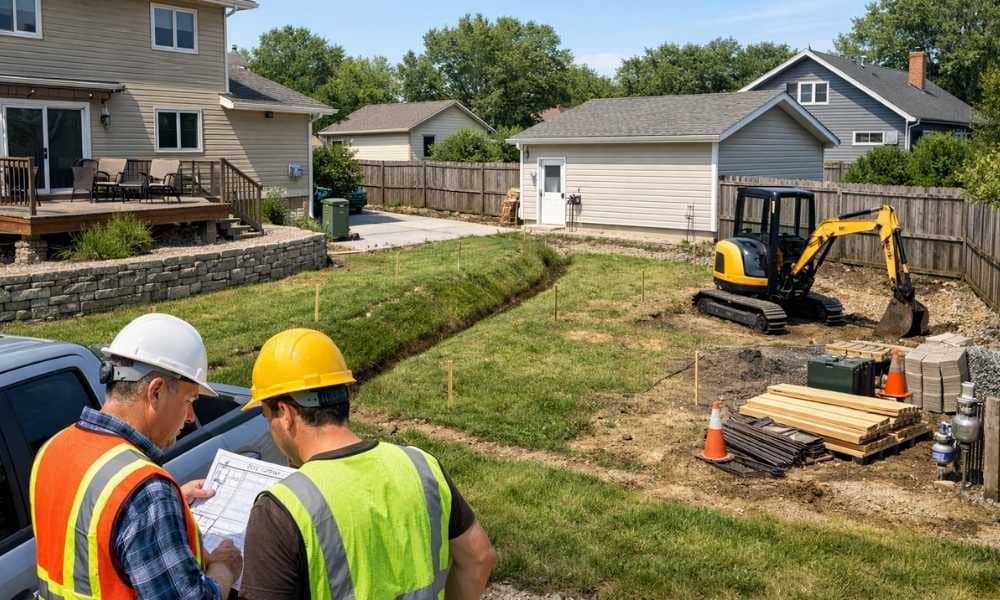
A plat of survey helps contractors know what they are working with before they break ground. It shows what is already on the lot, how water drains, where utilities connect, and how tight the access points are. Contractors who review it early avoid problems that cost time and money later.
Existing Improvements That Influence Addition and Remodeling Plans
Contractors check the plat to see what is already on the property.
The plat shows garages, patios, decks, sheds, driveways, and walkways. These features affect where new construction can go and what order the work needs to follow.
A detached garage near the back of the home can limit how far an addition can stretch. A concrete patio along the rear wall may need to come out before new footings go in. A shed near a corner can sit right where a new structure was planned.
Contractors also use the plat to plan deliveries. If a driveway runs between the street and the work area, the crew needs to know that before scheduling equipment drops.
The plat also helps protect features the homeowner wants to keep. If a deck is staying, the crew can build around it. Without the plat, that detail might not come up until work has already started.
Access Constraints Contractors Need to Identify Early
Getting tools, machines, and materials onto a lot is not always easy. The plat helps contractors find the tight spots early.
Many neighborhoods have narrow side yards. The plat shows how much room exists between the home and the property line. If a small excavator needs to reach the backyard, the contractor can check the width before renting the wrong size machine.
Fences, retaining walls, and thick landscaping show up on the plat too. These can block the path equipment needs to travel. A gate that is too narrow may need to come down for a few days. A retaining wall along the side may make it hard to store materials nearby.
Knowing this before work starts lets the contractor set up staging areas, plan delivery times, and choose the right equipment without guessing.
Drainage Patterns That Could Affect Finished Work
Water problems after a project is done are costly to fix. The plat helps contractors avoid creating them.
It shows swales, slopes, and how the land drains. These features move water away from the home and toward the street or a rear outlet. Contractors use this to make sure new work does not block that path.
Blocking a side yard swale with a room addition can cause water to sit against the foundation. Pouring a patio without checking the slope can push runoff toward the house instead of away from it.
In Indianapolis, finished grading has to move water away from structures. The plat gives contractors a head start on meeting that requirement before grading ever begins.
Existing Utility Features That Require Coordination Before Digging
Digging into a buried line is a serious risk. The plat helps contractors know where to be careful.
It shows where utility lines enter the home, where meters sit, and where easements are located. Those details point to where underground lines are likely to run.
Indiana law requires contractors to call Indiana 811 before any digging. The plat helps the crew figure out which areas need the most attention during that process.
Knowing where the electric, gas, sewer, and water lines connect to the home helps the crew plan dig paths that lower the risk of hitting something underground.
Neighboring Features That Can Influence Construction Activities
What is on the lots next door can affect how work gets done.
The plat shows fences, driveways, and structures near the shared property lines. Contractors use this to understand how close neighboring features are and what that means for the job.
A neighbor’s fence along the property line can limit how close a machine can work. A shared driveway near the work zone may need a short conversation with the neighbor. Trees or shrubs near the line can affect overhead space for equipment.
The plat also helps the team plan for noise and disruption. If the work runs close to a neighboring structure, the crew can schedule the loudest tasks during times that cause the least friction.
Frequently Asked Questions
What information do contractors look for on a plat of survey before construction begins?
Contractors look at existing structures, drainage features, access paths, utility entry points, and features on nearby lots. This information helps them plan the order of work, pick the right equipment, set up staging areas, and call for utility locates before digging starts.
Can a plat of survey help with planning a home addition or remodel?
Yes. The plat shows what is already on the lot and how much space is available. Contractors use it to plan additions, garages, patios, and other work without running into conflicts that could have been spotted early.
Why are drainage features shown on a plat of survey important?
Swales and slopes on the plat show how water moves across the property. Contractors use this to grade new work the right way and keep runoff from pooling near the home or spilling onto neighboring lots.
Does a plat of survey help contractors prepare for excavation work?
Yes. The plat shows where utility lines enter the home and where easements are located. That helps the crew spot high-risk dig areas and ask the right questions when utility locating services mark the site.
Should homeowners provide an existing plat of survey to their contractor?
Yes. Sharing the plat early gives the contractor key site details before the first visit. It helps with planning access, drainage, and utility coordination. If a homeowner does not have a current plat, a licensed land surveyor can prepare one.