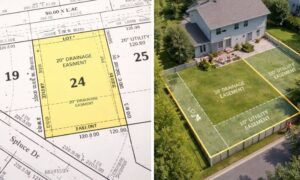
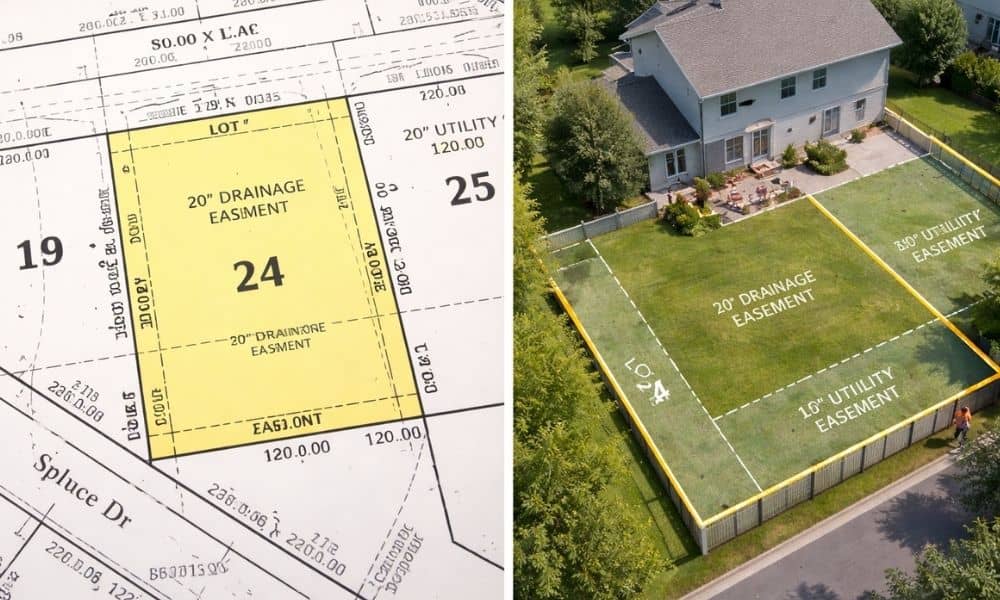
If you plan to build a fence, extend your driveway, or add onto your home in Indianapolis, you may start by looking up your property online. Soon enough, you’ll find a plat map from Marion County. At first glance, it looks clear. Lines, numbers, and labels seem to show exactly where your property sits.
So it’s easy to think, “I already know my boundaries.”
However, that’s where many homeowners go wrong.
A plat can help you understand your lot, but it does not show your exact boundary on the ground. Because of that, learning how to read it the right way is important especially before you move forward and understand how property lines are determined.
What a Marion County Plat Really Shows
A plat map is a drawing of how land was divided when a neighborhood was first built. It shows each lot, the streets, and how everything fits together.
When you look at your plat, you’ll see your lot outlined with straight lines. You’ll also see numbers along those lines. These numbers show the length of each side of your property, usually in feet. In addition, you may notice labels that mark easements or other features tied to the land.
At first, this feels very exact. However, the key thing to remember is simple:
A plat shows how the land was planned—not how it exists today.
Over time, things change. Markers can shift. Fences may go up in the wrong place. Even small changes can affect how a boundary sits in real life. So while the plat gives you a strong starting point, it does not confirm your actual property line.
Finding Your Lot Without Getting It Wrong
Before you read anything else, make sure you are looking at the correct lot. This sounds obvious, yet it is one of the most common mistakes.
In many Indianapolis neighborhoods, you will find similar layouts repeated across different sections. That means two lots may share the same number but belong to different parts of the subdivision.
Because of that, always match your lot number with the subdivision name. If your plat includes block or section details, check those too. This step helps you avoid building your understanding on the wrong property entirely and helps you better understand what a property line survey shows once everything is checked on the ground.
Understanding the Lines and Measurements
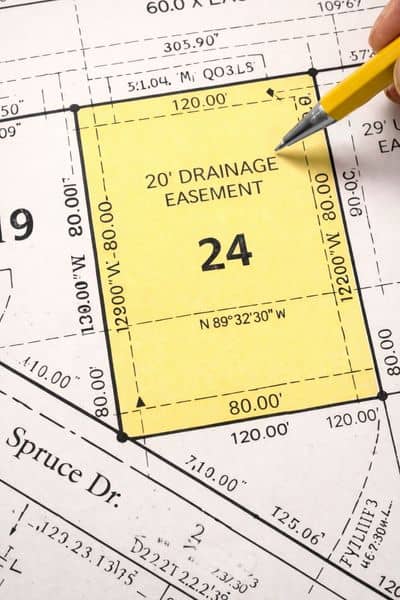
Once you know you have the right lot, the next step is to look at the lines and numbers.
Each line represents a boundary. Each number shows the length of that boundary. For example, one side of your lot might measure 120 feet, while another measures 80 feet.
These measurements help define the shape of your property. However, they come from recorded plans created when the subdivision was first designed.
Because of that, they do not guarantee that your current yard matches those exact numbers today.
Even a small difference can matter. A few feet may not seem like much, but it can affect where you place a fence or structure. So while these measurements are helpful, they should not be treated as confirmed field data.
Noticing Easements Before You Build
As you continue reading the plat, you may notice thin areas marked along parts of your lot. These are easements.
Easements allow certain uses of your land, even though you own it. In many cases, they are used for utilities or drainage. They often run along the edges of a property, but not always.
This is important because an easement can limit where you build. You might see open space on your lot and assume it’s usable. However, if that space falls within an easement, building there can lead to problems later.
For example, a utility company may need access to that area. If something is in the way, it may have to be removed.
So as you read your plat, pay attention to any labeled or shaded sections. These details can affect your plans more than you expect.
What the Plat Does Not Tell You
While a plat gives you useful information, it also leaves out some of the most important details.
It does not show where your boundary markers sit today. It does not confirm whether your neighbor’s fence follows the true line. It also does not account for changes that may have happened over time.
This is especially true in older parts of Indianapolis. Some properties have been in place for many years. During that time, markers may have been moved or lost. Fences may have been installed based on assumptions instead of measurements.
Because of that, even a clear plat can hide real-world differences.
Comparing the Plat to What You See Outside
After reviewing your plat, it helps to step outside and look at your property with fresh eyes.
Do the visible features match what you expect from the map? Do the fence lines seem to follow the shape shown on the plat? Are there any areas that feel slightly off?
In many cases, everything will appear correct. However, appearance alone can be misleading.
A fence that looks straight may not sit on the actual boundary. A corner that seems obvious may not match the recorded layout. These small differences often go unnoticed until a project begins.
So while it’s helpful to compare the plat with what you see, it’s just one part of the process.
Why Reading a Plat Still Isn’t Enough
By now, you can see that a plat helps you understand your lot, but it does not confirm your boundaries in real life.
That’s why a property line survey still plays an important role.
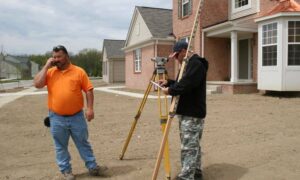
A survey takes the recorded information from documents like your plat and checks it in the field. A licensed professional measures the property, looks for existing markers, and verifies where your boundary lines truly sit.
This process removes guesswork. Instead of relying on plans or visual cues, you get clear and accurate information.
This becomes especially important when you plan to build near a boundary. Even a small mistake can lead to costly changes later. So having the correct line from the start makes a big difference.
Why This Matters for Indianapolis Properties
Indianapolis has a wide mix of properties. Some neighborhoods are newer, with clear layouts and recent development. Others are older, where changes have built up over time.
Because of that, no two properties are exactly alike.
In some cases, everything may match the original plat closely. In others, there may be small shifts that are not obvious at first glance. These differences can affect where you build and how your property is used.
So while the plat gives you a helpful view of your lot, it does not replace real verification.
Final Thoughts
Reading a Marion County plat is a smart first step. It helps you understand your property and gives you a sense of how your lot was designed.
However, it is only part of the picture.
If accuracy matters—and it usually does when building or making changes—then confirming your boundaries is key. A plat can guide you, but only a property line survey can show you exactly where your lines are on the ground.
Taking that extra step can save time, prevent mistakes, and give you confidence before moving forward.