You get a quote for a boundary survey, and at first, it feels pretty simple. Someone comes out, finds your property lines, and that’s it. But then you start thinking about what you’ll actually get at the end, and things aren’t so clear anymore. Will they mark your corners? Will you get a drawing? Or will you just see a few flags in the ground?
A lot of property owners in Indianapolis run into this. They move forward with the survey without really knowing what comes with it. Then when the work is done, they’re left wondering if that was everything. Nothing went wrong. It just wasn’t explained in a way that made sense from the start.
So before you move ahead, it helps to know what’s included in a boundary survey and what you should expect when it’s finished.
Why Boundary Survey Quotes Can Feel Confusing
Most quotes look simple at first. You see a price and maybe a timeline. However, the part that matters most—the details of what’s actually included—is often missing.
That’s where confusion starts. Two surveyors can give you similar prices, yet the work they include can be very different. One might provide a drawing, while another focuses only on marking the property.
Also, survey terms are not always easy to understand. Because of that, many people assume everything is covered. Then later, they realize certain parts were never included.
Without a clear idea of what to expect from a boundary survey, it’s easy to think you’re comparing the same thing when you’re not.
What You Should See After the Survey Is Done
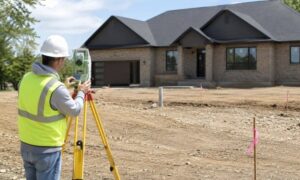
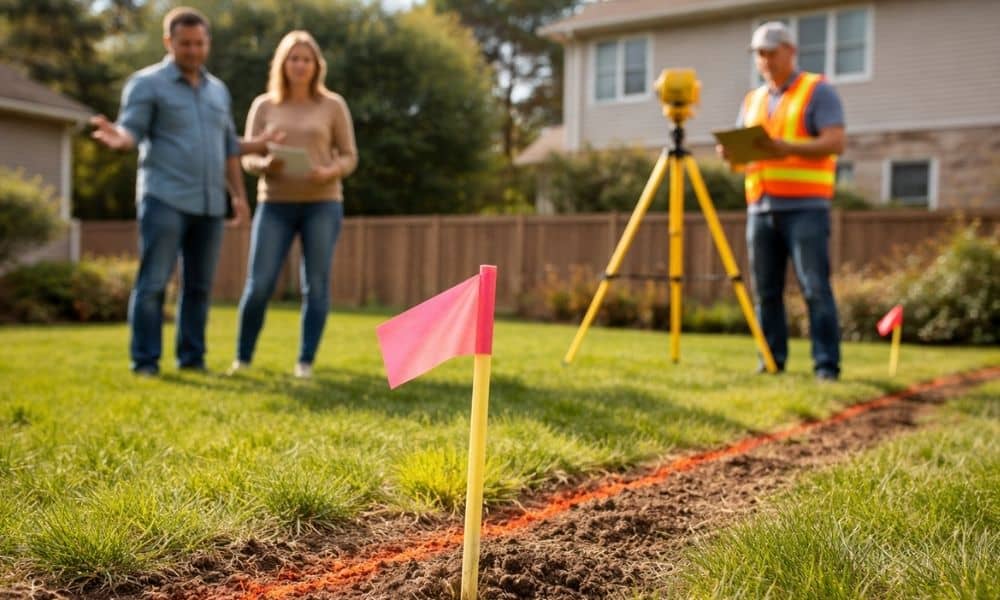
Once the survey is complete, you should be able to step outside and actually see the results. In most cases, the surveyor will start by locating your property corners. These corners may already have markers in place, like metal pins in the ground.
If those markers are missing or hard to find, new ones may be set. This step matters because everything else depends on those points. They define where your property begins and ends.
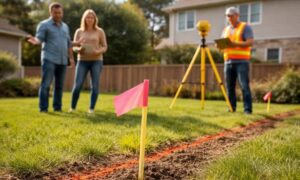
After that, the surveyor will usually place visible markers on the site. These might be stakes or flags along the boundary lines or at key spots. Because of this, you should not have to guess where your property lines are.
This part of the process is what most homeowners notice first. It gives you a clear, physical sense of your land.
What You May Receive After the Work Is Finished
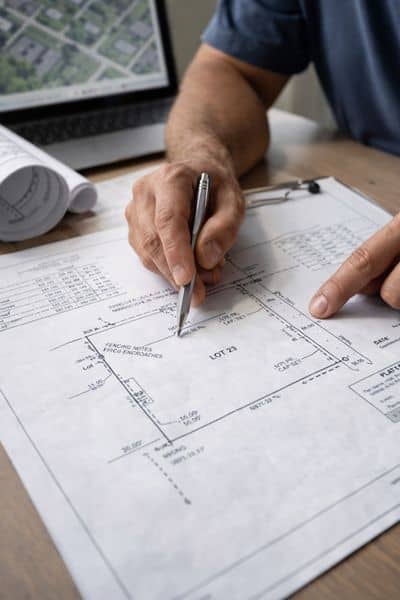
Many people expect a detailed map when they order a boundary survey. Sometimes that’s included, but not always.
If a drawing is part of the service, it will show your property lines, the shape of your lot, and basic measurements. It gives you something you can keep, share, and refer back to later.
However, not every boundary survey automatically includes a full drawing. That’s why it’s important to ask about this before the work begins, not after it’s done.
Why the Measurements Matter
The stakes and flags are helpful because you can see them. But the real work happens behind the scenes with the measurements.
These measurements define your property using exact distances and directions. Even if you never look at them yourself, they make sure everything lines up with recorded information as closely as possible.
Without those measurements, the markings on the ground would not mean much. So while the visible parts are helpful, the accuracy behind them is what really matters.
What a Boundary Survey Does Not Automatically Include
This is where many people get surprised. A boundary survey does not cover everything about your property.
For example, it usually does not include elevation or grading details. It also does not provide a full layout of buildings or improvements unless that is part of the request.
In addition, things like drone images or construction layout fall under different services. If you need those, you have to ask for them ahead of time.
Knowing this upfront helps you avoid expecting something that was never part of the job.
Why the Scope Can Vary From One Property to Another
Not every property is the same, so the work can change depending on the situation.
Larger properties may take more time to measure. Smaller lots, especially in tighter areas, may require more careful work. Older neighborhoods can also make things more challenging if markers are missing or hard to find.
In Indianapolis, you see a mix of both newer and older properties. Because of that, no two surveys are exactly the same.
This is why it’s important to understand what applies to your specific property.
Why It Helps to Ask a Few Questions First
Before you agree to the work, it’s worth taking a moment to ask a few simple questions.
Ask what you’ll receive at the end, how the property will be marked, and whether a drawing is included. You can also ask if new markers will be set if they’re missing.
These questions don’t take long, but they can save you from confusion later on. More importantly, they help you feel confident about what you’re paying for.
Why This Matters for Property Owners in Indianapolis
In Indianapolis, properties can vary quite a bit. Some are newer with clear boundaries, while others are older and less defined.
Because of this, it’s easy to assume every boundary survey works the same way. However, that’s not always the case. What you get depends on the property and the scope of the work.
When you understand what’s included before you pay, everything becomes easier. You know what to expect, and there are no surprises when the job is done.
A boundary survey should not feel confusing. Once you have a clear picture of what’s included, it becomes a straightforward step in understanding your property.