If you plan to build anything on your property—like a garage, room addition, fence, or even a large shed—you need clear and accurate measurements. This is where construction surveys help you avoid expensive mistakes. Many homeowners jump into a project because it feels simple, yet a few inches in the wrong direction can cause huge problems. And with all the recent talk about the Michigan–Indiana border being “blurry,” it’s easy to see how even big areas get confused when people don’t check their boundaries. So imagine how easily a small lot in a neighborhood can go off track.
Construction surveys give you the confidence that your project sits exactly where it should. They also keep you out of trouble with the city, your neighbors, and your budget. Because of that, understanding how these surveys work helps you protect your investment before the first shovel hits the ground.
Why the Border Story Matters to Your Backyard Build
Earlier this year, news outlets reported that the Michigan–Indiana state line might be off by several feet. That shocked a lot of people, but surveyors didn’t feel surprised. Old markers rot, maps change, and ground shifts. This happens on residential properties all the time, too. So builders place sheds, garages, or fences in the wrong spot because they rely on old drawings or guesswork. Later, the city steps in and forces a redo.
In Indianapolis, a few inches can change everything. Setbacks, zoning rules, easements, and lot lines stay tight in many neighborhoods. When these lines get ignored, your project stops, and your wallet takes the hit. That border news proves one point: accuracy always matters, even when you think you know where your property begins and ends.
What a Construction Survey Really Does
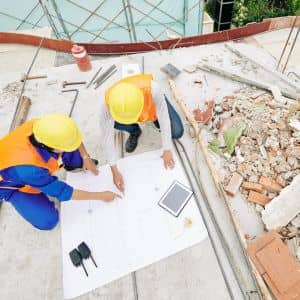
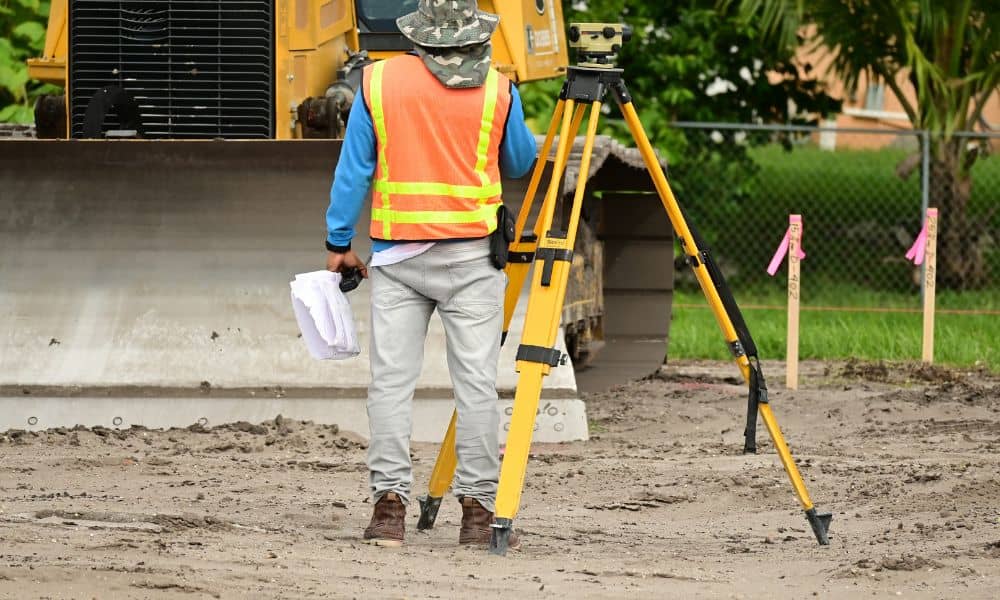
Construction surveys guide your builder so the structure sits exactly where your plans say it should. Instead of guessing, the surveyor marks the corners of your project on the ground. These stakes show the exact location, shape, and orientation of the building. Surveyors double-check your deed, subdivision plat, and past surveys. They study setbacks and easements. They look for missing or moved corners. They make sure your project fits legally and safely.
You and your contractor get a clear layout. No confusion. No last-minute surprises. And no risk of ending up too close to your neighbor’s line.
Even though this sounds technical, surveyors explain everything in plain language. They want you to understand what they find because your money and your home depend on the accuracy of this work.
How Surveyors Prevent Build-Line Failures
Once the paperwork checks out, the surveyor visits your property. First, they locate the property corners. Sometimes they find them right away. Other times they search deeper, especially in older subdivisions where pins moved or disappeared. After they identify the corners, they calculate the exact build area. Then, they stake the footprint based on your plans.
Let’s say you want a new garage. The surveyor places stakes where the walls will sit. They also mark offsets so the builder measures every side correctly. If the builder follows the stakes, the garage sits perfectly inside the setback. Nothing crosses into the neighbor’s land. Nothing touches a drainage easement. Nothing breaks city rules.
This clear layout keeps your project smooth from start to finish. And it reduces arguments later because the surveyor already confirmed everything upfront.
Real Stories Homeowners Can Relate To
Surveyors see a lot. They notice patterns that repeat in Indianapolis year after year. For example, a homeowner builds a fence along what they think is the boundary. But their lot is not a perfect rectangle like they assumed. The fence crosses into the next yard by two feet. The neighbor complains. The homeowner pays twice—first to install, then to remove, then to reinstall.
Another example: a family adds a sunroom. They trust an old survey they found in a drawer. The sunroom ends up inside a utility easement. The city steps in and tells them to remove the new structure. This family loses thousands of dollars in materials and labor.
Construction surveys avoid these problems. They give you proof. And when you have proof, you feel safe moving forward.
Why Homeowners Need This More Than Ever
Indianapolis continues to grow, and more homes go up each year. Lots feel smaller, setbacks feel tighter, and zoning rules feel stricter. Builders move fast, but your city inspector still checks every detail. Because of that, the margin for error stays small.
Also, many older neighborhoods have outdated markers. If markers moved during past landscaping or utility work, your current project might sit on the wrong line. That creates fights, delays, and legal trouble.
Construction surveys cut through the noise. They use modern tools like robotic stations and GPS. They show exactly where your land begins and ends. This is the simplest way to avoid embarrassment or major expenses later.
How Much Does a Construction Survey Cost?
Most homeowners expect a huge price tag, but the cost is often lower than people think. In Indianapolis and surrounding areas, a typical construction survey ranges from $650 to $1,200 for a standard residential project. More complex projects or lots with missing corners cost more, but still far less than redoing a build.
Think of it this way: you spend a little now to save a lot later. One small mistake costs far more than a proper survey.
How to Work Smoothly With Your Surveyor
You don’t need to understand all the technical parts. You just need clear communication. When the surveyor explains their findings, ask questions. Share your plans. Ask where the setbacks fall. And check the stakes before construction begins. Good surveyors welcome your involvement. They want you to feel confident.
Most importantly, choose a licensed land surveyor with experience in construction layouts. They know local codes and understand how builders work here in Indianapolis.
Final Thoughts:
You want your project to last. You want it to follow the rules. And you want peace of mind. Construction surveys give you all of that. When surveyors lay out your project with care, everything else becomes easier. Builders work faster. Inspectors approve quicker. Neighbors stay calm. And you stay stress-free.
The Michigan–Indiana border debate shows how much confusion grows when people skip measuring and checking. So before you begin any construction on your property, get a survey. Accuracy protects your investment every single time.