When people hear the term topographic survey, they often think of lines on a map or numbers showing elevation. In reality, a good survey tells a much bigger story. It shows how land really works. In Indianapolis, many sites look flat at first glance. However, small changes in slope can affect drainage, design, and construction. That is why the way a survey is built matters.
Today, a topographic survey is not created with one tool or one site visit. Instead, surveyors combine modern technology with hands-on field work. Two key parts make this possible: LiDAR data and field verification. Together, they help create a clear and reliable picture of the land.
Why modern surveys begin before crews visit the site
In the past, survey crews gathered most data directly from the field. While that method worked, it took more time and left room for missed details. Today, surveyors often start by reviewing digital data before stepping onto the property.
This early step helps them understand the site as a whole. It also allows them to plan field work better. As a result, the final topographic survey becomes more accurate and more efficient.
How LiDAR supports a topographic survey
LiDAR uses laser pulses to measure elevation across large areas. These measurements form a surface model that shows how the land rises and falls. For Indianapolis sites, this information is very helpful. The area often has gentle slopes that are easy to miss but important for drainage.
With LiDAR, surveyors can see how water may move across a site. They can also spot small elevation changes that affect design. This gives them a strong starting point before field work begins.
Still, LiDAR does not replace a topographic survey.
Why LiDAR alone is not enough
LiDAR works well for showing general land shape. However, it cannot capture every detail. Sharp edges, building corners, curb lines, and small surface features often need more precise measurement.
Trees, vehicles, and other objects can also affect LiDAR readings. Because of this, surveyors use LiDAR as a guide, not a final result. Field verification fills in the gaps.
How LiDAR helps plan better field work
By reviewing LiDAR data first, surveyors know where to focus once they are on-site. They can see where slopes change, where drainage paths form, and where elevation details matter most.
This planning helps crews work smarter. They collect accurate measurements where they matter most, instead of spending time on unnecessary areas. Because of this, the survey stays detailed without wasting time.
What field verification really means
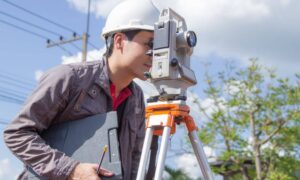
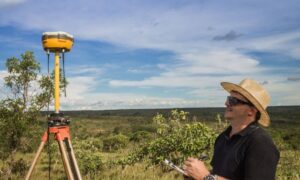
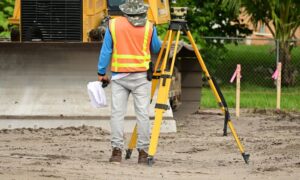
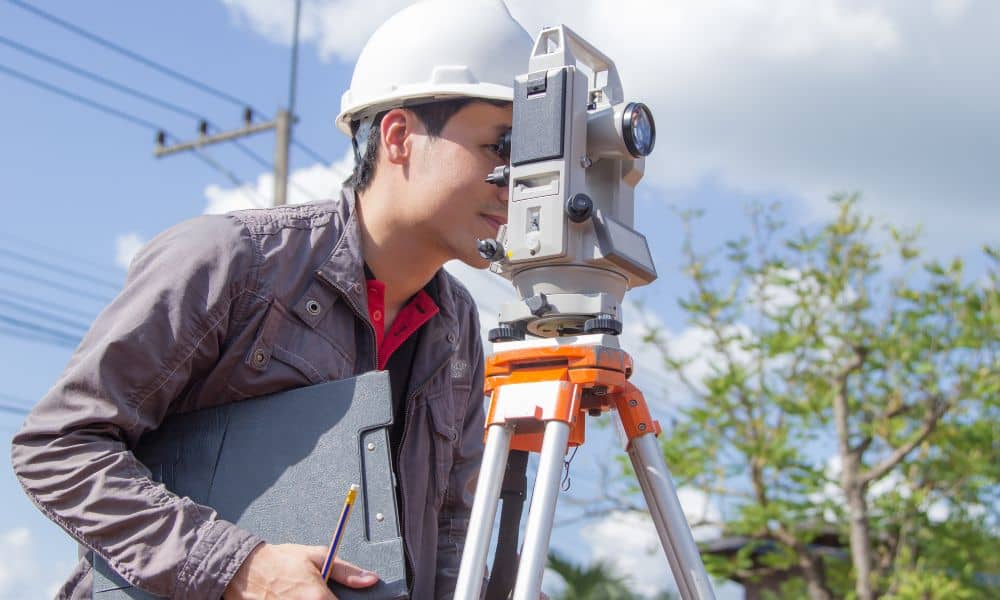
Field verification is not about repeating LiDAR data. Instead, it confirms and improves it. Survey crews measure important site features and check key elevations using ground-based equipment.
This step ensures the topographic survey matches real conditions on the property. It turns digital data into information that designers can trust.
What survey crews focus on during field work
While on-site, crews pay close attention to features that affect design and construction. These include pavement edges, building locations, drainage paths, visible utilities, and places where slopes change.
Each feature plays a role in how a project moves forward. Missing details can cause problems later. Field verification helps avoid those issues early.
How LiDAR data and field measurements come together
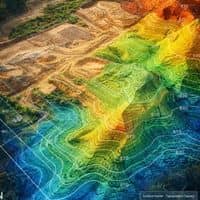
After field work ends, surveyors combine ground measurements with LiDAR data. This step requires care. The goal is to create one clear surface that reflects both large elevation patterns and precise site details.
Surveyors review contours, adjust elevations, and resolve differences between datasets. Once finished, the topographic survey provides a solid base for planning and design.
What clients receive from a completed topographic survey
A finished topographic survey gives clients clear and useful information. It shows elevation contours, spot elevations, and mapped site features. These files work smoothly with design software, making it easier for engineers and planners to move forward.
Because the data reflects real site conditions, design decisions become more confident.
When this type of survey works best
A LiDAR-supported topographic survey works well for many Indianapolis projects. It is especially helpful for larger sites, redevelopment projects, and properties with drainage concerns. It also helps during early planning when elevation affects project decisions.
In these cases, combining LiDAR with field verification creates better results than using either method alone.
How this process helps avoid future problems
Many project delays start with poor base data. When elevation details are missing, designs often need changes. These changes cost time and money.
A well-built topographic survey reduces these risks. It gives designers accurate information from the start, leading to fewer revisions and smoother project flow.
Final thoughts
A reliable topographic survey is not created in one step. It is built through a careful process that combines technology with field experience. LiDAR shows the big picture, while field verification adds detail and accuracy.
For Indianapolis sites, this approach captures small land features that make a big difference. When the survey reflects the land correctly, planning and construction become much easier.